The pressure tactics were lifted nationwide, with the government’s commitment to fulfill all the terms agreed upon… To prevent bloodshed, we do not want this to escalate to a state of emergency. (Mario Argollo, president of the COB, Vision360, June 19, 2026)
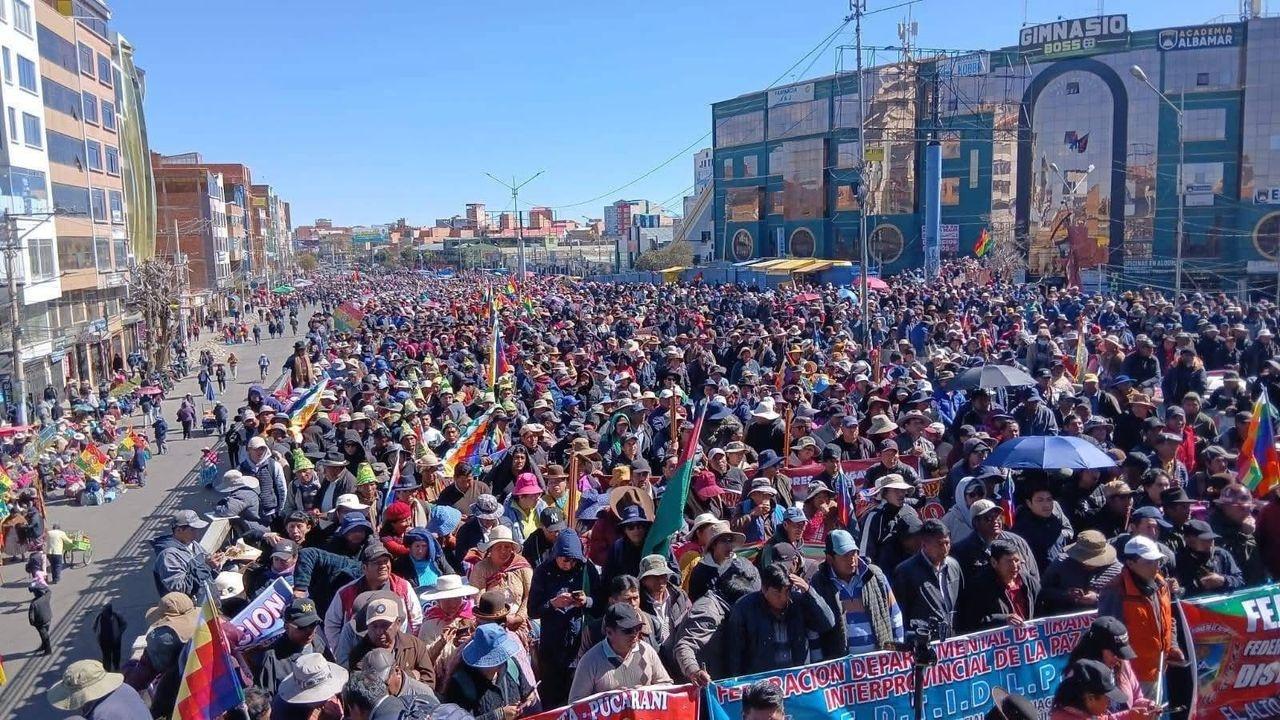
Even though the country’s masses wanted to oust the head of state, he remains in power and has succeeded in lifting the blockades.
A dominated country and a stunted bourgeoisie
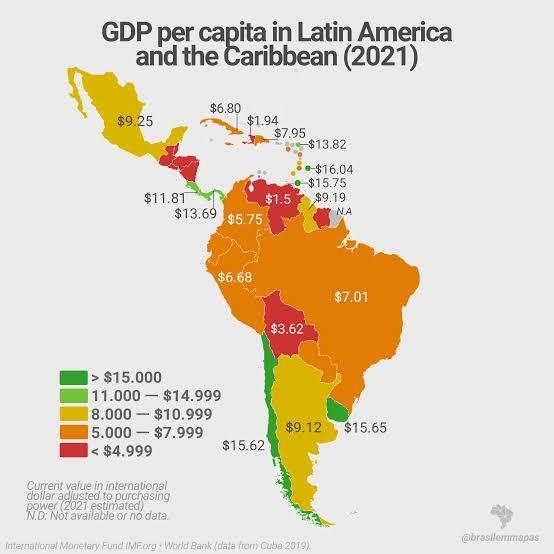
Landlocked in South America, Bolivia is a country with a population of 12.5 million, divided between a temperate high plateau in the west—nestled between two mountain ranges—and a tropical alluvial plain in the east.
The main language is Spanish, but a significant portion of the population speaks Aymara or Quechua, particularly among miners and farmworkers. In the 20th century, the economy depended largely on tin exports; today, it relies on natural gas, lithium, and coca.
The surplus value resulting from the exploitation of the working class is largely transferred to foreign capitalist groups—both legal and mafia-like. Locally, capital accumulation is limited, so the bourgeoisie’s legitimacy is fragile. It is constantly torn between the degree of dependence on imperialist powers, the choice of which power to favor, and the method to employ in the face of recurring struggles by the masses—workers, peasants, students, informal-sector workers, and national minorities. This stunted ruling class oscillates between accepting the role of lackey to the American master, the temptation to play the Chinese imperialist card, and nationalist rhetoric. Such an option ensures popular support and control over labor unions and peasant organizations. But when nationalist parties come to power, they capitulate and disappoint their working-class and peasant base, which leads to the emergence of a new “populist” party: Authentic Republican Party (PNG), Revolutionary Nationalist Movement (MNR), Revolutionary Left Movement (MIR), Movement Toward Socialism (MAS)…
“Democratic” phases alternated with military juntas (1964–1982) that were even more violent toward the masses than civilian governments.
Thanks to the Fourth International, the miners’ union adopted the Pulacayo Theses in 1946
The lesson to be learnt from the terrible defeat of the Chinese Revolution of 1925–1927 is that the analysis of capitalism as a mode of production that has become obsolete on a global scale (its imperialist phase) must be matched by a strategy of permanent revolution. The Fourth International explicitly rejects any subordination of the proletariat to any wing of the bourgeoisie, even in the dominated countries.
The national bourgeoisie in the backward countries is incapable of effecting this transformation, even in a partial manner… Democratic and transitional slogans retain their full validity, however… The democratic struggle must not be left in the hands of the national bourgeoisie but must, under conditions of a rising mass movement, find expression in the creation of workers’, peasants’, and soldiers’ councils… In this struggle, the guiding policy of the workers’ party must be to preserve its own independence and the independence of the working class. (‘The Colonial World and the Second Imperialist War’, May 1940, Emergency Conference Of The Fourth International)
In Bolivia, miners form the core of the working class, a position reinforced by the US imperialist army’s demand for tin during the Second World War. The Miners’ Trade Union Federation (FSTMB) was founded in 1944 under the leadership of Lechin (MNR). In 1946, at the instigation of Guillermo Lora and a core group from the Revolutionary Workers’ Party (POR), it adopted a revolutionary programme at its Pulacayo Congress, which developed the 1938 programme and the 1940 manifesto of the Fourth International. The Pulacayo Theses therefore opposed the popular front and the subjugation of the proletariat to any sector of the bourgeoisie, even one that temporarily adopted anti-imperialist rhetoric to deceive workers, peasants and students.
Capitalist exploitation predominates qualitatively… Unrealized bourgeois tasks are democratic-bourgeois objectives that must be carried out without delay… The ruling class uses the state as a powerful instrument… To hold that the bourgeois-democratic revolution will be carried out by “progressive” sectors of the bourgeoisie and that the future state will be a government of national unity and harmony is, on the other hand, tantamount to saying that the revolutionary movement will be strangled. (‘The Pulacayo Theses’, November 1946)
However, this programme makes no mention of the Bolivian equivalent of the Chinese GMD, the MNR, which first came to power in 1943 following Major Villaroel’s coup d’état, nor of the need for a Bolshevik-style party. The POR remains poorly distinguished from the MNR.
In 1946, the pro-American faction of the bourgeoisie regained power and carried out a crackdown that lasted until 1952. The POR MPs elected in January 1947 sat alongside those of the FSTB (still led by the MNR) within the ‘Parliamentary Mining Bloc’. Faced with severe government repression, in 1949 the POR proposed an ‘anti-imperialist united front’ to the Partido de la Izquierda Revolucionaria (PIR, the Stalinist party from which the PCB would emerge in 1950) and to the MNR.
In 1951, the leadership of the Fourth International reverted to the ‘anti-imperialist united front’
In 1948–1949, the leaders of the Fourth International (Pablo, Mandel, Frank, Maitan, etc.) adapted to Stalinism, which was at its height and was spearheading the Yugoslav, Vietnamese and Chinese revolutions.
In 1951, at their ‘world congress’ (in which Hugo González took part on behalf of the POR), they revived Zinoviev and Radek’s Anti-Imperialist United Front (AIUF), which had been adopted in 1922 by the Communist International. Owing to the tragedy of the Chinese Revolution, the AIUF had disappeared from all the programmatic texts of the Fourth International.
The international revisionist Secretariat (ISFI) effectively opposes Pulacayo’s theses. It drives the POR into the arms of the bourgeois party with its nationalist and anti-imperialist rhetoric, conveniently portrayed as ‘petty-bourgeois’, the Movimiento Nacionalista Revolucionario (MNR).
In Bolivia… our reorganized forces should remedy, all these defects without however slipping into sectarianism or isolating itself from the masses and their movements which are often ideologically confused and under the leadership of the petty-bourgeoisie (MNR). (‘The International Situation and Tasks in the Struggle against Imperialist War’, August 1951, Fourth International, 12.6)
In the event of the mobilization of the masses under the preponderant impulsion or influence of the MNR, our section should support the movement with all its strength, should not abstain but on the contrary intervene energetically in it with the aim of pushing it as far as possible up to the seizure of power by the MNR on the basis of a progressive program of anti-imperialist united front. On the contrary, if in the course of these mass mobilizations, our section proves to be in a position to share influence over the revolutionary masses with the MNR, it will advance the slogan of a Workers’ and Peasants’ Government of the two parties on the basis, however, of the same program, a government based on committees of workers, peasants and revolutionary elements of the urban petty bourgeoisie. (‘Latin America: Problems and Task’, August 1951, Fourth International, 12.6)
In 1952, the POR sent Guillermo Lora to Paris to work with the international leadership (the Pabloist ISFI).
Since the revision of the programme formalised in 1951, the so-called Trotskyist movement (Pabloists, Morenoists, Grantists, Cliffists, Lambertists, Healysts, Lorists…) has blurred the boundary between the workers’ movement and the bourgeoisie in the dominated countries; it has turned the strategy of permanent revolution into an objective process that does not require a Bolshevik-type party; and it has transformed revolutionary activists into mere pressure groups in the dominated countries, focusing on bourgeois nationalism (including Islamism) and, everywhere, on the trade union bureaucracies. It fosters all manners of illusions about elections and constituent assemblies, popular fronts with bourgeois parties, ‘socialist’ generals and colonels, and even religious fanatics. Their program is carefully stripped of self-defense, the workers’ militia and the insurrection that brought glory to the Bolivian labour movement in the second half of the 20th century.
During the 1952 revolution, the POR came out in favour of an MNR-COB government
Whilst the population was predominantly made up of peasants and workers (of Indigenous American origin), political power was wielded by the parties or generals of ‘la rosca’, the bourgeoisie of the ‘tin barons’ and the large landowners (of European colonial origin). Women and illiterate people did not have the right to vote.
On 9 April 1952, a faction of the army linked to the MNR attempted a coup against the pro-Yankee government, which was repressing the working masses. Miners and peasant workers seized the opportunity and, under the leadership of the POR, formed armed militias that swept aside the regular army.
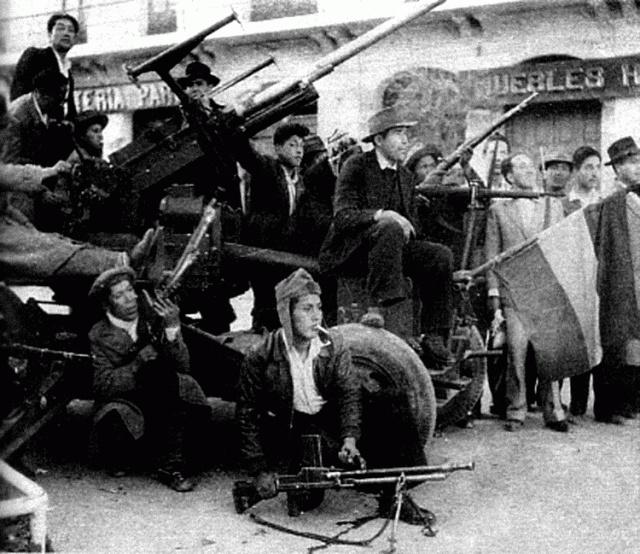
With the outbreak of the Bolivian revolution, the COB was founded on 17 April 1952, largely thanks to the POR. However, the POR called for an MNR government – that is, of a bourgeois party. Within the trade unions, there was nothing to distinguish the POR from the faction of the bourgeois party led by Juan Lechin.
In the absence of Soviet-style bodies vying for power, Paz Estenssoro (MNR) took the reins of the capitalist state with the support of the POR.
Despite the fact that it was illegal, a call was made to all mass parties, including the MNR, to organise a united front to fight against imperialism… In such circumstances, the POR defends the government with all its might by mobilising the masses. (Guillermo Lora, ‘Entrevue’, La Vérité n° 294, 17 April 1952)
The Bonaparte is caught between, on the one hand, pressure from the mobilised peasant and working-class masses and, on the other, the demands of US imperialism and a faction of the local bourgeoisie comprising large landowners and sectors dependent on foreign capital. This faction is represented by parties hostile to the MNR, such as the Falange Socialista Boliviana (FSB) and the majority of the army’s general staff. The US embassy and secret services forge close ties with them.
For its part, the MNR government disarmed the workers’ militias and reorganised the bourgeois army (from which emerged, amongst others, Generals Barrientos and Banzer, who were responsible for massacring workers). It attempted to integrate the trade union movement into the bourgeois state in the name of a ‘co-government’ between the MNR and the COB. In July 1952, it introduced universal suffrage.
In October 1952, he nationalised three mining companies in return for compensation. Their assets were consolidated into a state-owned enterprise, the Corporación Minera Boliviana (Comibol). As it did not have its own smelters, it had to supply tin to the smelter belonging to Williams Harvey Smelter in Liverpool, owned by the Patiño group, and to the Texas City smelter controlled by the US government. Positions on the Comibol board were handsomely remunerated (and often in dollars). The allocation of these posts became one of the main means of corrupting the trade union apparatus of the FSTMB and the COB.
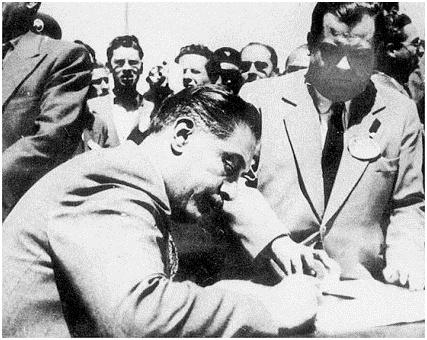
In August 1953, Paz Estenssoro decided to implement a limited agrarian reform to create a class of small landowners in rural areas. This social group would serve as a base of support for General Banzer in 1971 and for the MAS in 2005 against the working class. The Vice-President assured the US government that the government was anti-communist and that it maintained control over what he termed ‘the far left’.
The masses cannot distinguish between the MNR and the POR. The latter supports Lechin and calls for more ‘workers’ ministers’ of his ilk in the bourgeois government, which is strengthening the army and regularly denounces Trotskyism. The POR gives the impression that the populist government can, in this way, transform itself into a workers’ and peasants’ government. In Argentina, Moreno (a political chameleon who would, in turn, be an anti-Peronist Trotskyist, a Maoist, a ‘workers’’ Peronist, an anti-Guevarist Castroist, a social democrat, an anti-Mandelist ‘Trotskyist’, an anti-Lambertist ‘Trotskyist’ and, finally, a Morenist…) takes the slogan so far as to demand that the COB’s leadership (the MNR) take power.
Nahuel Moreno always claimed that he called for ‘All Power to the COB’, as opposed to the POR policy of adaptation to the MNR left-wing. But Moreno’s slogan was only a variant of the popular-frontist resolutions of the 3rd congress of the 4th International and the ‘government of the MNR left-wing’ position. In May, his paper put forward the “Demand that the worker ministers elected and controlled by the Miners Federation and the new Workers Centre are taken into the Paz Estenssoro government”. (Frente Proletario, 29 May 1952).
In 1953, the split in the Fourth International and the POR
In 1953, the Fourth International split into two (the pro-Stalinist ISFI and the ‘orthodox’ ICFI), with neither faction calling into question the united front with the national bourgeoisie (AIUF). In Argentina, Nahuel Moreno’s GOR (which had voted for all the opportunist resolutions at the 1951 international congress) implemented the anti-imperialist united front by joining Colonel Perón’s bourgeois nationalist movement (PJ). In 1954, Lora and González took part in the ISFI’s ‘4th World Congress’ in Paris. But the POR itself split shortly afterwards. Neither of the two PORs of the 1960s and 1970s broke with the AIUF or with the criminal illusions in the national bourgeoisie.
A majority faction led by Möller and Lora joined the MNR. At the last moment, Lora did not follow the liquidators and set about establishing a POR-Masas entirely under his control, which attempted to affiliate itself internationally with the CIQI and then, after 1971, alongside the PO of Argentina, with the Lambertist OCRFI. He then went on to build, without the PO, his own international grouping, the CERCI/CLRQI, which was reduced to a few groups in Latin America. Lora died in 2009.
A minority faction led by Gonzales remained loyal to Palo’s ICFI and subsequently to the pro-Castrist ISFI led by Mandel, Hansen and Moreno, which was formed in 1963 through the merger of the ISFI with part of the ICFI (the US SWP and Moreno’s SLATO).
Even in the case of countries where large mobiliza- tions and class conflicts in the cities may occur first, civil war will take manifold forms of armed struggle, in which the principal axis for a whole period will be rural guerrilla warfare… (‘Resolution on Latin America, 9th Congress of the Fourth International’, The Militant 7.26, July 1969, p. 720)
Consequently, the POR-Combate adopted a strategy of rural guerrilla warfare, which led most of its members to join the Castro-led ELN directly. The POR-Combate ceased to exist when Gonzales rallied to Morales’s cause in the early 20th century. Gonzales died in 2010.
In 1971, the POR-Masas aligned itself with the Stalinists in support of a military junta
In 1955, Paz Estenssoro adopted an ‘economic policy plan’ that opened the country up to foreign capitalists. Due to the constitution in force at the time, he was unable to stand in the presidential election of June 1956. He was replaced by the former vice-president, Siles Zuazo (84 per cent of the vote). Faced with inflation and recession, the MNR government negotiated with the IMF and imposed an austerity plan (‘monetary stabilisation plan’) which froze wages and abolished subsidies on basic necessities. The MNR began to lose the support of the masses, whom it had managed to deceive in 1952 with the help of the PIR, the PCB and the Pabloite POR.
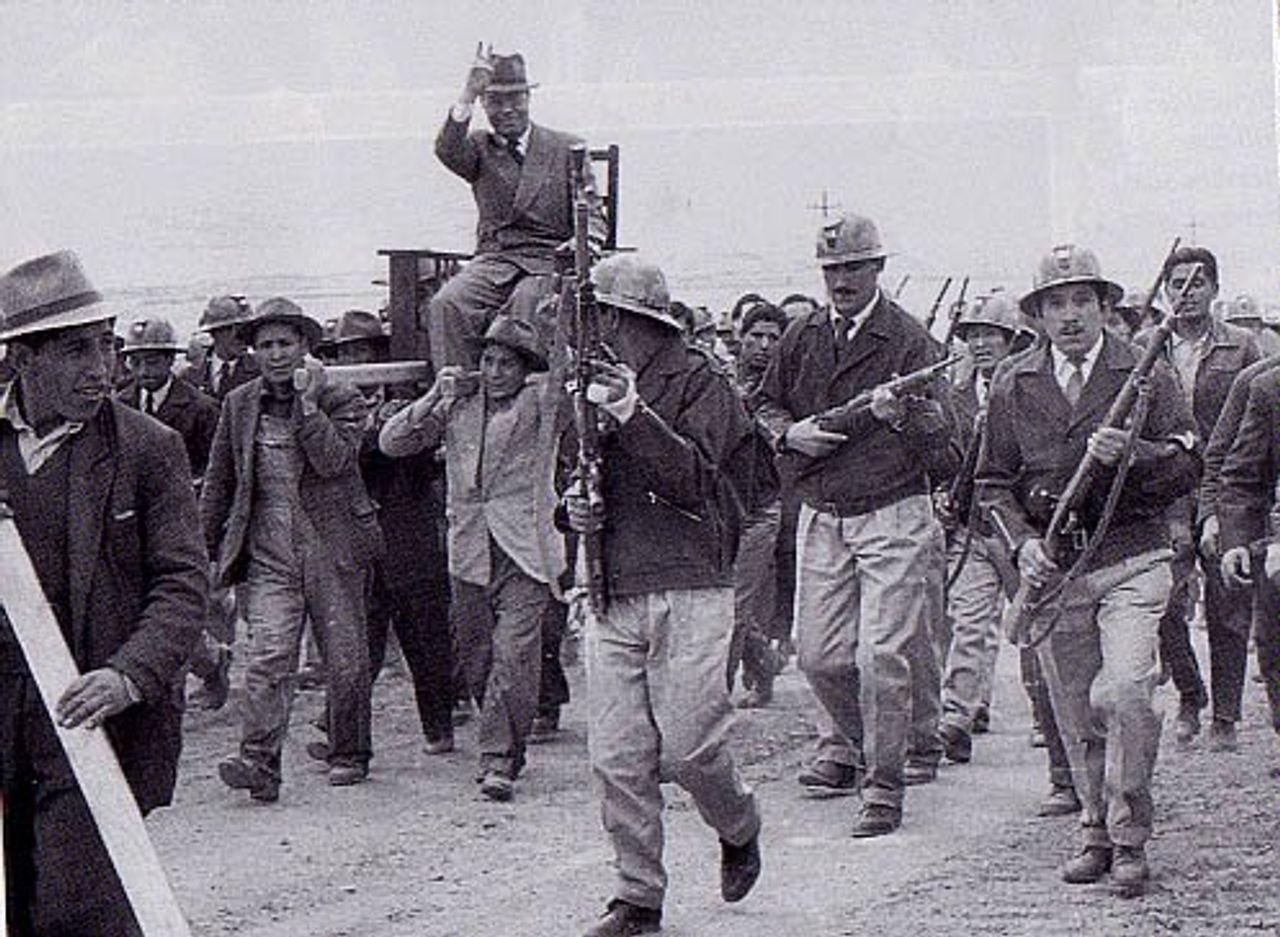
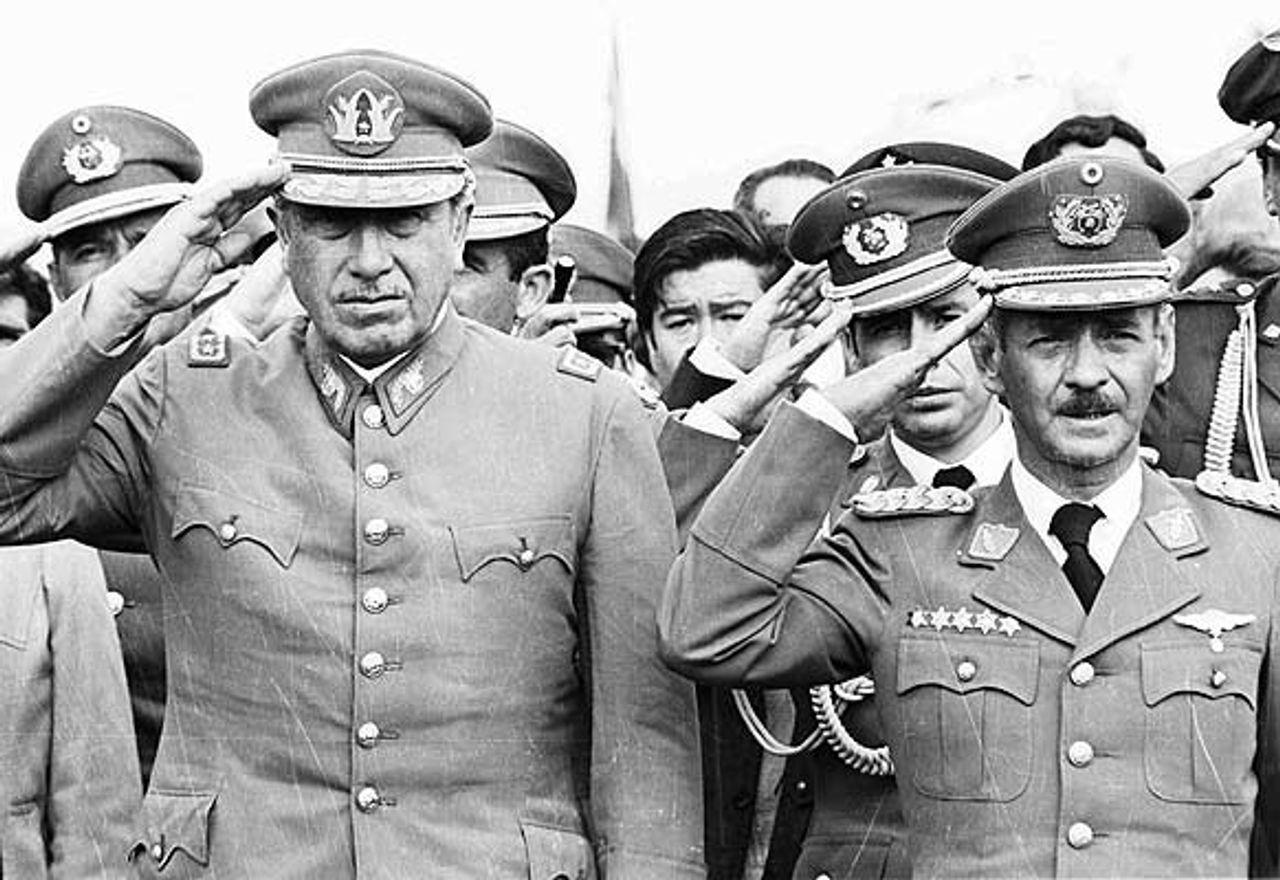
In 1960, Paz Estenssoro was elected president with 76 per cent of the vote. The vice-president was Lechin (MNR). In 1964, Paz expelled Lechin before being re-elected with General René Barrientos as his vice-president. Lechin founded a new bourgeois nationalist party, the PRIN, with a faction of the MNR (and support from defectors from the POR). The MNR government violently suppressed the three-day strike called by Lechin and the COB leadership. Generals Barrientos, Ovando and Banzer overthrew the elected president with the complicity of the CIA. Lechin endorsed the military coup.
The junta proclaimed a ‘pact between the military and the peasants’ by bribing indigenous chieftains. It established the first tin smelter (until then, the ore had been smelted abroad). Barrientos, a former MNR member (who speaks Quechua), was elected in 1966 with over 66 per cent of the vote, with the support of the PIR and the PRA (a splinter group of the MNR). Barrientos exiled Lechin, brutally suppressed the workers in June 1967 (the San Juan massacre) and assassinated numerous activists from the PCB and the POR. With the help of the US Johnson administration (Democratic Party), the army chief Ovando captured and murdered Che Guevara in October; Guevara’s guerrilla movement (the ELN, supported by the POR-Combate) had failed to gain support amongst the peasants or receive the aid promised by the PCB.
President Barrientos died in an accident in April 1969. In September, General Ovando overthrew the legitimate government and suspended the crackdown on the working class. He announced the nationalisation, with compensation, of the US oil company Gulf Oil (now Chevron). The PRIN leadership of the COB then emerged from hiding and called on ‘officers, priests, the liberal professions, peasants and workers’ to form an ‘anti-imperialist united front’. In January 1970, Chief of Staff Juan José Torres explained that, in the absence of a sufficiently strong bourgeoisie or proletariat, it fell to the army to defend the country against imperialism.
Within the trade unions, the POR-Masas formed a bloc with the Stalinist PCB. In April 1970, the 4th Congress of the COB, under joint pressure from the PCB and the POR-Masas, officially adopted the ‘revolution in stages’ of global Stalinism, accompanied by a few radical phrases. The second stage, the socialist revolution, was deferred to the future, with the immediate task being the stage of the ‘anti-imperialist popular revolution’ waged through an ‘anti-imperialist popular front’.
For its part, the POR-Combate denounced this concession and called on miners to take up arms as they had done in 1952. However, somewhat contradictorily, it called on workers and students to leave their communities to wage a guerrilla war in the countryside. In September 1970, the army crushed the second guerrilla attempt by the pro-Castro ELN.
In October 1970, General Miranda, backed by the Phalange (FSB), overthrew Ovando. The COB called a general strike against the coup. The PCB, the PCB-ML, the PS and the POR-Masas, together with the PRIN and a faction of the MNR, called for an ‘anti-imperialist popular government’ and formed a popular front, the Comando Político (Political Command). General Torres ousted General Miranda. He boasted of having maintained ‘the unity of the armed forces’ (sic). He appointed General Reque, who had led operations against the guerrillas, as Chief of the General Staff, and left Banzer, who had been trained by the US Army, at the head of the military academy.
The Political Command supports the junta. The POR-Combate denounces illusions in the bourgeois army… but counters them with guerrilla warfare. In January 1971, General Banzer attempts to overthrow General Torres. Miners take up arms. Banzer is set free and Torres refuses to supply weapons to the workers and students who join them. He urges them to place their trust in the army.
The bourgeois nationalist PRIN leadership of the COB convenes an ‘Asamblea Popular’ (People’s Assembly), whose members are not elected but appointed by the apparatuses it selects. Yet the POR-Masas misrepresents the People’s Assembly as an ‘anti-imperialist front with Soviet characteristics’ (that is to say, identical to the workers’, soldiers’ and peasants’ councils of the Russian Revolution), ‘an organ of power of the masses and the working class’ which ‘monitors the government’s activities’. But if the People’s Assembly were a Soviet-style body, it would be elected by the struggling masses. If it were an ‘organ of power of the masses’, it would not have to ‘monitor’ a bourgeois government, but would have to replace it. The POR-Masas opposes the presence of the POR-Combate in the People’s Assembly, whereas a soviet is a workers’ parliament, a forum for democratic debate between the various parties recognised by the struggling masses.
According to Lora, it would be ‘madness’ to call for a workers’ government. In fact, because of the impotence and stupidity of the reformist leaders and the bourgeois democrats who do nothing but talk, the People’s Assembly serves only to distract the masses, who remain unarmed and without any organs of self-organisation. It met on 21 June 1971 and then on 2 July in the parliament building, with the junta’s permission and under the chairmanship of Lechin, without ever taking any action or holding elections. Discussions there centred mainly on strengthening the presence of trade union bureaucrats within Comibol, in highly paid posts – a reformist illusion shared by the POR-Masas.
The fascist coup was precipitated to prevent the expansion of the workers’ struggle for control of Comibol. (Guillermo Lora, ‘De l’assemblée populaire au coup d’Etat fasciste’, Bolivie : de la naissance du POR à l’assemblée populaire, EDI, p. 227)
The People’s Assembly’s latest decision is to suspend its deliberations for two months, until 7 September. General Banzer, however, is in no hurry. In August 1971, with the support of the US government under Nixon (Republican Party), the FSB and the MNR (still led by the former president from 1952, Paz Estenssoro), a faction of the army launched an assault on the government and, above all, on the workers’ strongholds. Lechin assured the masses that the coup would not spread, as the army would remain loyal to Torres. Miners and students demanded weapons, but Torres refused to give them any.
Activists from both PORs courageously led the counter-attack, but it was not enough. Right up to the end, the POR-Masas pinned its hopes on a general from the bourgeois army, a Bonaparte.
In October of 1970… everybody thought—including we Marxists—that the arms would be given by the governing military team. (Guillermo Lora, ‘What Happened in Bolivia’, The Bulletin, 8.4, 27 septembre 1971, p. 8)
Leaders who place their trust in the generals of the bourgeois army are not Marxists. Instead of correcting their mistakes in the light of the events of 1952 and 1971, Lora and Gonzales led the POR-Masas and the POR-Combate into a new popular front, the Anti-Imperialist Revolutionary Front (FRA), alongside the ELN, the PCB, the PS and representatives of the bourgeoisie (General Torres, the PRIN and the MIR).
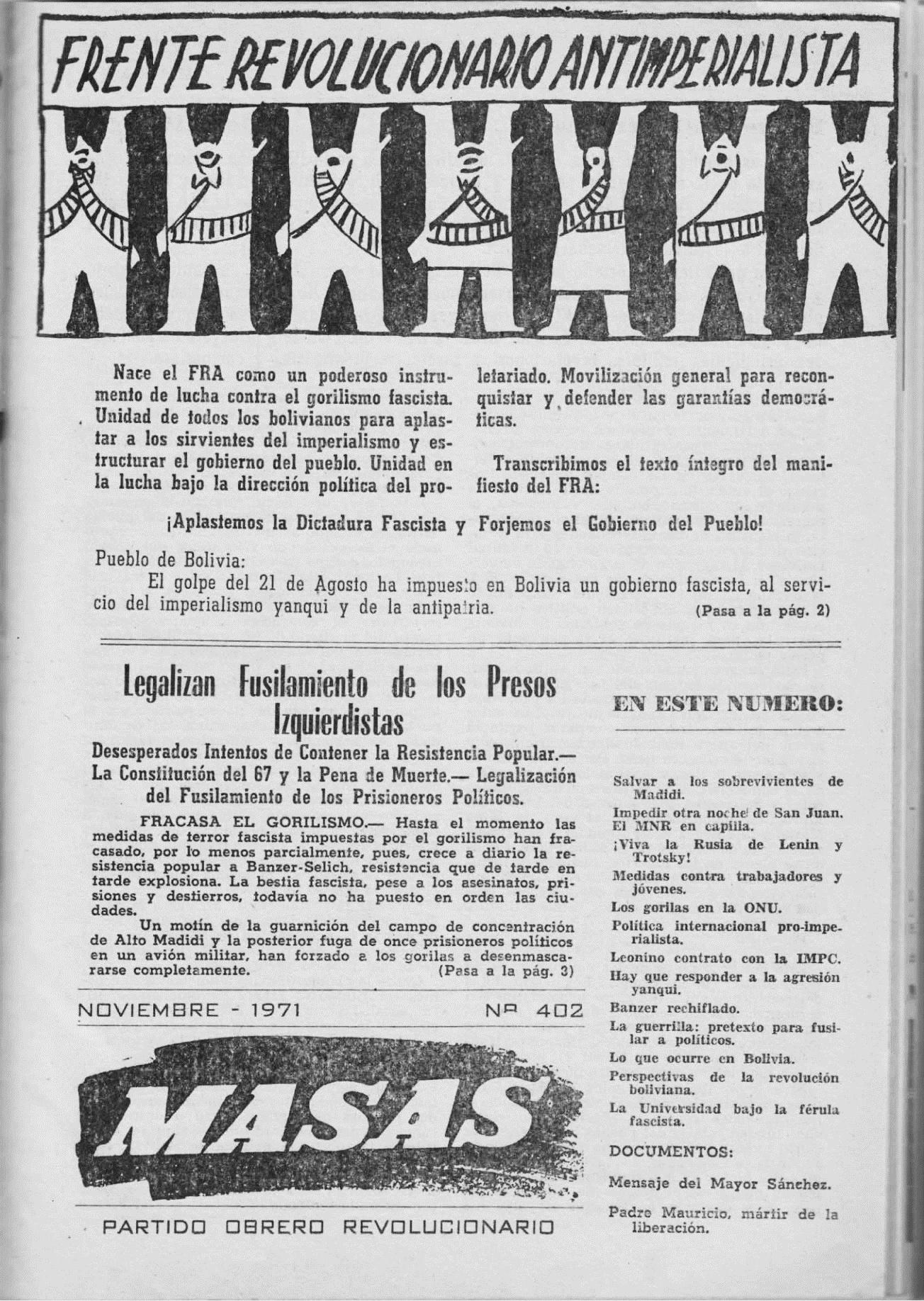
In 1978, the Maoist PCB-ML founded the FRI together with the PRIN and the POR-Combate. The FRI would degenerate into a bourgeois party that allied itself with the MNR.
Counter-revolutionary terror was to continue in Bolivia until 1982. Across the subcontinent, the secret services of Bolivia, Chile, Argentina, Brazil, Paraguay and Uruguay, together with the US CIA, collaborated to assassinate labour activists (‘Operation Condor’).
Between 2005 and 2019, the MAS demonstrated, once again, the impotence and felony of the national bourgeoisie
Vice-President Quiroga, who replaced Banzer, handed over the newly discovered gas fields to US capitalist groups. This sparked popular uprisings in 2003, led by a new bourgeois nationalist party rooted in the peasantry, the Movimiento al Socialismo (Movement Towards Socialism, MAS).
Between 2003 and 2012, Latin America experienced economic growth driven by Chinese demand. This benefited Argentina’s PJ (the successor to Colonel Perón’s PT-PJ) and Venezuela’s PSUV (founded by Colonel Chávez), which were thus able to secure social peace for a time. In Bolivia, during the 2005 general election, Evo Morales (MAS) defeated Quiroga. He became the country’s first indigenous president. Gas revenues made it possible to fund income redistribution without significantly affecting private property. Revenue from exports to Brazil, Argentina, India and China bolstered public finances, whilst the boom in trade and the informal economy reshaped the cities.
Morales convened a constituent assembly which, in 2005, drafted a constitution that was put to a referendum in 2009. The ‘Bonaparte’ attempts to broaden the social base of the bourgeois state by legalising the traditional cultivation of coca, making concessions to indigenous religions and tribal leaders, and authorising small mining enterprises presented as ‘co-operatives’—free from any trade union involvement and unburdened by environmental constraints. In 2008, Morales promised to exploit lithium (20 per cent of global reserves) through state-run operations. However, the state-owned company Yacimientos de Litio Bolivianos (YLB) failed.
During the global capitalist crisis of 2009, the fall in commodity prices and global capitalist demand, the resulting collapse in tax revenues, and the scarcity of foreign currency weakened bourgeois nationalism in Latin America. In May 2013, the government of Morales and García Linera cracked down on wage-earning workers on strike at the call of the COB. The MAS organised a counter-demonstration ‘in defence of democracy’, drawing on the peasant organisations and neighbourhood associations under its control.
In 2014, Morales was re-elected president in the first round with 61 per cent of the vote. In 2016, he narrowly lost the referendum on constitutional reform. The aim was to enable him to stand for re-election as president. The LOR called for abstention; the POR called for a ‘no’ vote, effectively aligning itself with the pro-American bourgeois parties (MDS, PDC, Unidad, MNR, etc.)
Elected as the MAS candidate in 2020, President Arce signed several contracts in 2024 with the Chinese group Hong Kong CBC for two lithium carbonate plants and with the Russian company Uranium One Group, a subsidiary of Rosatom, for a third. The 2025 general election put an end to the shift towards Chinese imperialism and brought Bolivia back into the US sphere of influence.
Moreniosm in the wake of bourgeois nationalism
The Morénist MST (formerly the PST) – initially affiliated to the LITQI/LITCI, now to the LIS – joined the MAS, despite Trotsky’s plea not to do so.
Our organization doesn’t participate in the Peru’s APRA, China’s Kuomintang, or Mexico’s PRM. (Leon Trotsky, ‘Latin American Problems: A Transcript’ 4 novembre 1938, Writings, vol. 14, p. 785)
The MST’s leader, Pablo Solón, is appointed by Morales as ambassador to the UN.
The rival Morénist group LOR (affiliated to the TFFI/FTCI coalition, now RCPFI/CRPICI) presents the bourgeois nationalist party as a ‘reformist’ party. The LOR wants to revive the People’s Assembly of 1971.
Call on the COB and the FMSTB to convene a People’s Assembly. (Lucha Obrera, 30th January 2003)
https://ceip.org.ar/La-cuestion-de-la-Asamblea-Constituyente-revolucionaria
Its founding organisation, the PTS, called for a constituent assembly in 2001 in Argentina, a country where bourgeois ‘democracy’ is in place. Similarly, the LOR is calling for a constituent assembly in Bolivia.
To nationalise gas, through a revolutionary constituent assembly. Let the COB, the CSUTCB, the FEJUVE and the COR of El Alto, the FSTMB and the other organisations involved in the struggle call for a People’s Assembly, right now! (LOR, Palabra Obrera, juin 2005)
https://lorci.org/spip.php?article62
To sound radical, the Morenists add ‘revolutionary’ to their slogan – an adjective that the Fourth International’s programme did not use in 1938 when referring to India (then colonised by Britain) or China (then fragmented and dominated by the major imperialist powers). The centrist group’s ploy changes nothing: a national or constituent assembly, whatever its label, is in no way progressive in countries where there are elections, universal suffrage and a multi-party system. It is an outdated slogan, a noose around the proletariat’s neck, as demonstrated by Tunisia, Chile and Bolivia in the early 21st century.
Yet the LOR supports the Bonapartist patch-up of the bourgeois state.
Many workers in both urban and rural areas place their trust in the MAS. That is why we are prepared to stand together in defence of workers’ political rights and legitimate democratic aspirations – such as the demand for a free and sovereign constituent assembly – against any attempt to further restrict or circumvent them. (LOR, 5 October 2005)
https://estrategiainternacional.org/Conspiradores-contra-el-pueblo-trabajador?lang=es
As for its programme, the LOR espouses a form of reformism disguised as ‘anti-capitalism’ and the ‘uniting of struggles’, which ‘overlooks’ the struggle against trade union bureaucracies, bourgeois nationalist leaderships and reformist parties, and which ‘overlooks’ the arming of the workers, insurrection and the dictatorship of the proletariat.
We must prepare for the possibility of major social upheavals fuelled by the global capitalist crisis, by organising the forces committed to the anti-capitalist struggle… by calling for unity amongst all social movements of the oppressed – grassroots, environmentalist and feminist movements – so that they may unite around a common cause to put an end to this decadent system alongside the working class in every country. (Palabra Obrera, June 2013)
The Lorist POR accuses the LOR, in a chauvinistic manner, of being a foreign import. The Lorist sect supports the police movement, which has been infiltrated by the pro-US wing of the bourgeoisie, against the populist government, as if it were part of the working class.
Police officers, don’t wait until the one-month deadline has passed. Get started now! (Masas No. 2310, 17 May 2013, p. 6)
The sham of the 2025 general election
In August 2025, in the first round of the presidential election, the candidates of the three main pro-imperialist bourgeois parties (PDC, Libre, Unidad) together accounted for 78 per cent of the votes cast.
During the campaign, facing Jorge Quiroga (of the Alianza Libre bloc, of which the MNR is a part), the PDC and Paz were not shy of the usual demagoguery employed by bourgeois candidates during election campaigns. Paz captured the support of voters disillusioned with Morales and the MAS, which had been discredited and fragmented. The PDC, a party less well-organised than its rivals, promised to put an end to drug trafficking and corruption, to maintain social gains and to deliver ‘capitalism for all’. The vice-presidential candidate is Captain Edmand Lara, who has gained popularity for exposing police corruption.
In October 2025, the pair were elected in the second round, after the candidate from another centre-right party, Unidad [Unity], who had come third, withdrew in favour of Paz.
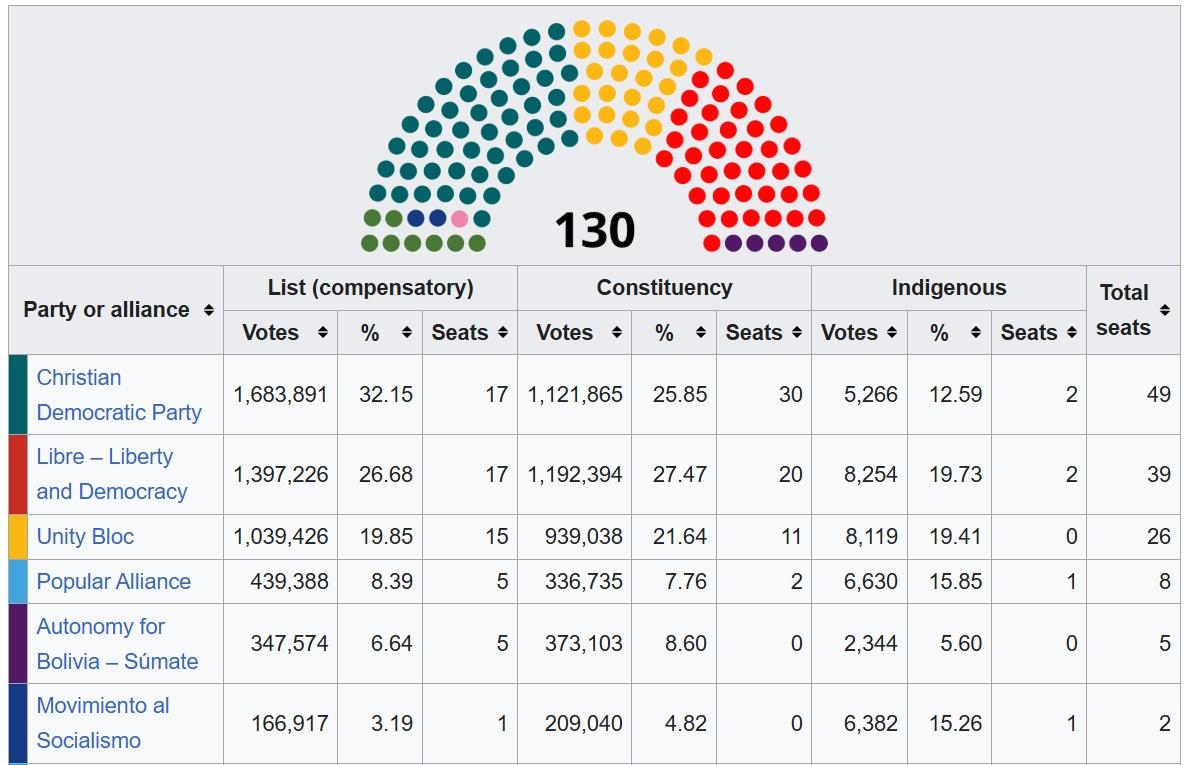
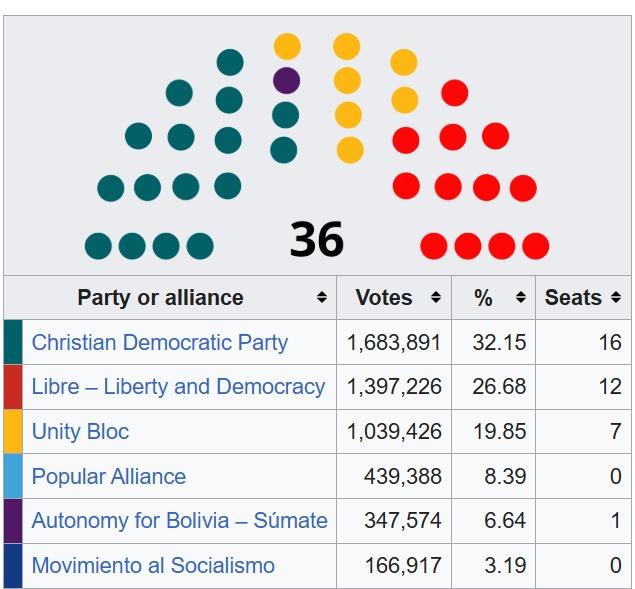
Once in power, Paz immediately reassured the ruling class. At the business forum ‘Bolivia for the World, the World for Bolivia’, he gave assurances that he would continue with extractivism (exporting lithium and gas) and that the state would ease regulatory constraints and cut social spending. Lacking an absolute majority in parliament, he relied on a PDC-Unidad bloc. Vice-President Lara opposed this.
With Paz’s permission, the US Drug Enforcement Administration (DEA) and the CIA returned to Morales’s home region, the Chapare, from where they had been expelled in 2008–2009. The abolition of fuel subsidies, under Decree 5503 of 17 December 2025, led to an 86 per cent rise in the price of petrol and a 160 per cent rise in the price of diesel. Miners, teachers, transport workers, public sector workers, peasants and Indigenous peoples took part in demonstrations, strikes and roadblocks…
But the working class does not take the lead amongst the semi-exploited classes, as it did in 1952 and 1971. It does not call a general strike, does not establish soviets on a national scale, and takes up arms only to a very limited extent.
The bureaucrats are negotiating with the government that the masses want to oust
The general strike promised by the COB leadership at the ‘open meeting’ on the 1st of May was never carried out. The 16-point statement published the following day by the confederal bureaucracy makes no further mention of it.
Unhindered by a revolutionary party or by self-organisation (which is limited to certain neighbourhoods of El Alto), the COB leaders are able to call for a one-day action on 4 May. The trade union bureaucracies (COB…), peasant organisations (CSUTCB…) and a large proportion of the neighbourhood committees (FEJUVE) are dispersing the fighting spirit across separate demonstrations, road blockades without organised self-defence, and 24-hour strikes called on different dates: long-distance lorry drivers and public hospitals on 6 May, primary school teachers on 11 May, miners in state-owned enterprises on 11 May, and those in private enterprises on 14 May… Some strikes are renewed, but they remain fragmented and the rank and file are unable to impose a general strike until their demands are met. Les bureaucrates négocient avec le gouvernement que les masses veulent chasser
Roadblocks are a form of protest typical of the petty bourgeoisie. Self-employed workers cannot collectively stop work in defiance of their employer, as they are both the business owner and the workforce (often alongside family members). The government is attempting to turn the shortage – which mainly affects indigenous people in remote areas and the inhabitants of El Alto, the vast working-class suburb overlooking the capital – to its advantage. Backed by the mainstream media, it is also trying to discredit the uprising by linking it to Morales and drug trafficking. It has succeeded to some extent: on 18 May, miners from the Huanuni tin mine, who had been furloughed, demanded that the COB call for the roadblocks to be lifted.
On 10 May, the COB signed a populist front pact with the indigenous movement Ponchos Rojos and with Senator Condori of the bourgeois Unidad party. There was, of course, no mention of a general strike, but it was stated that the COB would not sign anything whilst Paz remained president. One wing of the bureaucracy (the branches in Santa Cruz, Cochabamba, Tarija, etc.) felt this was too much to ask.
The PDC-Unidad government wasted no time.
- On 5 May, the government reached an agreement with transport operators in La Paz (where there is little public transport) and Santa Cruz.
- On 6 May, the government agreed to reduce the price of fuel for taxis.
- On 6 May, following the ‘indigenous march’ on 4 May, the national leadership of the main farmers’ organisation, the CSUTCB, reached an agreement with the president, who undertook to review the text of Law 1720.
- On 14 May, additional benefits were granted to the police to ensure their zeal in cracking down on the protesting masses. On that day, they dispersed the workers’ demonstration in Murillo Square in La Paz. From then on, it was the indigenous peasantry and workers in the informal sector of El Alto (the vast working-class suburb overlooking the capital) who continued to oppose the Paz government en masse.
- On 15 May, the leadership of the National Federation of Mining Cooperatives (Fencomin – which comprises small businesses that are exempt from tax, prohibit trade union membership and cause environmental damage) reached an agreement with the Minister for the Economy. The gold-mining cooperatives’ outstanding social security contributions (CNS), amounting to 95 million bolivianos (approximately 7 million euros, 8 million dollars), were written off. Fencomin ceased its protests.
- On 16 May, the El Alto leadership of the COB reached a compromise with the government and did not join the national movement.
- On 16 May, the leadership of the CTEUB, the COB’s education federation, signed an agreement with the Minister of Education for an annual bonus of 2,400 bolivianos (208 dollars, 180 euros).
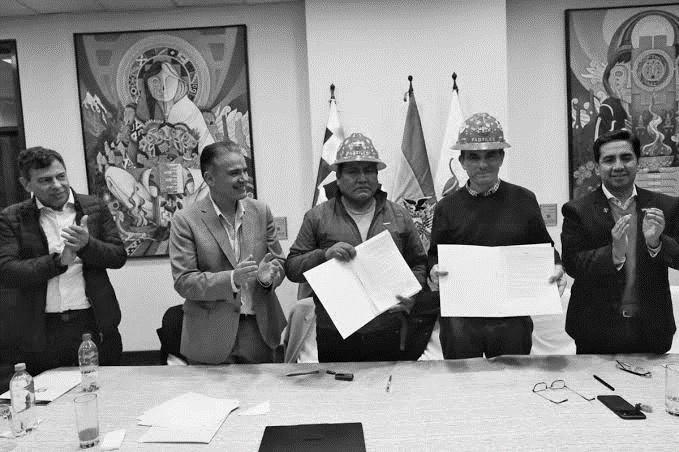
- On 17 June, the leaders of the COB’s largest trade union, representing the Huanuni state-owned tin mine, signed an agreement for a bonus of 5,000 bolivianos (434 dollars, 370 euros). The president undertook not to privatise the company, and the miners’ representative explained his position as follows:
Now more than ever, we must work towards bringing peace to the country, strengthen coordination between the various sectors and meet the population’s supply needs. (Omar Choque, 18 June)
- On 18 June, members of the Colquiri miners’ union signed a similar agreement.
- On 19 June, the national leadership of the COB signed an agreement with the president.
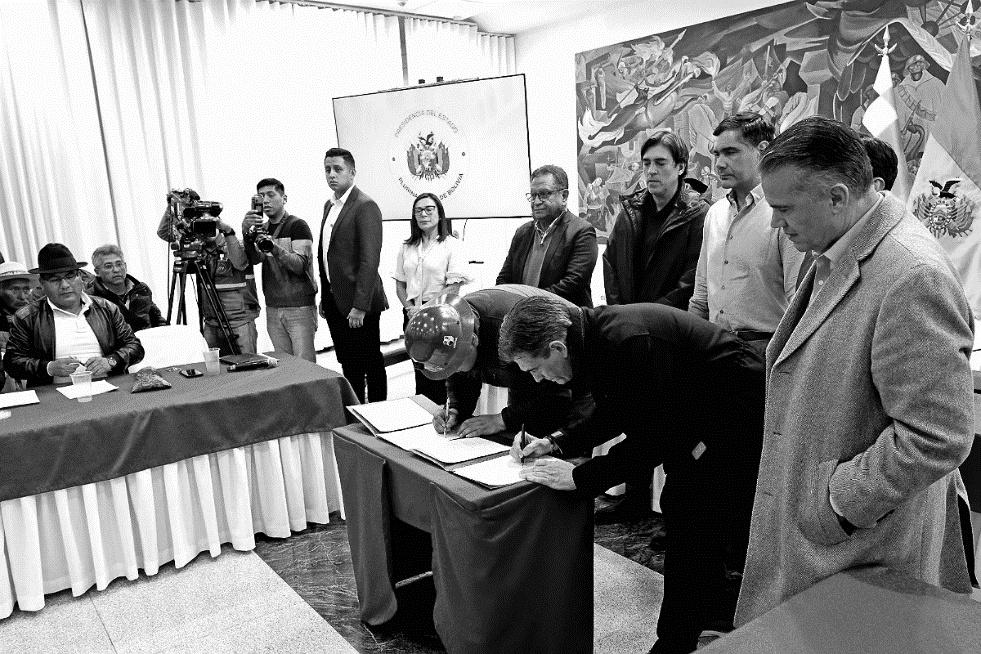
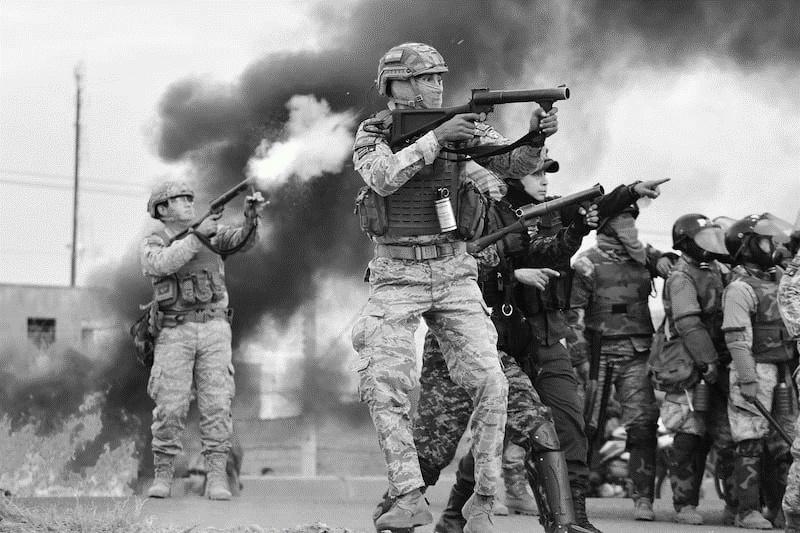
By the 19th, half of the hundred or so roadblocks remained. On 20 June, the government hastened to declare a state of emergency. On 23 June, the army and police cleared the remaining roadblocks. On 5 July, Vicente Salazar, leader of the Tupac Katari farmers’ organisation, was arrested.
Former President Morales (MAS), whom Paz accuses of instigating the unrest, declared that he had never wanted roadblocks and called for new elections within 90 days.
The trade union bureaucracy was poorly rewarded. On 13 July, Supreme Decree 5654 abolished the automatic deduction of trade union dues from wages, which had been introduced by Decree-Law 07204 of 1965 to finance and corrupt the trade union apparatus.
On 29 July, the IMF lent the equivalent of 1.9 billion dollars to Bolivia.
For 53 days, the working class, workers and poor peasants defied the bourgeois state without the support of a revolutionary party. What was the activity of the organisations claiming to follow Lenin and Trotsky during this crucial period?
Centrism capitulates to the trade union bureaucracies
On several occasions, a vanguard has drawn on the local and international experience of the working class in an attempt to emancipate the Bolivian working class from bourgeois nationalism: a POR group linked to the miners in 1946, the Leninist Faction of the POR in 1954, the LSR in 1970, and Poder Obrero in 1985. These core groups degenerated or disappeared, victims of fierce repression and, above all, the disappearance of any international communist centre.
By contrast, within the current labour movement, no organisation has learnt the lessons from the revision of the programme by the leadership of the Fourth International in 1951, or from the POR’s failure to distance itself from the national bourgeoisie in 1952. No organisation has learnt the lessons from the degeneration of the two organisations that emerged from the POR, which capitulated to the rotten apparatus of the COB and joined a popular front. Worse still, the growing influence of the quasi-reformism of the Argentine Morenist current has served to erase the revolutionary aspect that the POR’s policy still retained in 1952: the self-defence of the masses, the workers’ and peasants’ militia, and the workers’ and peasants’ insurrection.
At present, three organisations – the Revolutionary Workers’ Party (POR, Lorist), the Revolutionary Workers’ League for the Fourth International (LOR, Morénist), which is linked to the Argentine PTS, and the Socialist Movement of Workers (MST, Morénist), which is linked to the Argentine MST – refer to the now-defunct Fourth International (1933–1951). But they have no intention of merging to form a democratic party based on its programme. On the contrary, they are fighting all the more fiercely precisely because they share the same revision of the programme, the same opportunism towards bourgeois nationalism, and the same accommodation to the trade union bureaucracies.
In June 2026, according to the leaders of the Argentine PTS who guide the LOR, the COB leadership is not betraying the movement; it is simply playing for time.
The COB leadership appears to be reluctant to put in place the necessary resources to organise the general strike and is adopting a strategy of attrition. (Matías Maiello & Josefina Martínez, Les Leçons stratégiques de la rébellion bolivienne et la crise organique en Amérique latine, 9 June 2026)
But calling for ‘days of action’ and negotiating with the Paz government have nothing to do with a ‘strategy of attrition’ against the government. These are manoeuvres, well known throughout the world, designed to sap the workers’ fighting spirit, to sabotage the general strike and to avert any risk of paralysing national capitalism, any risk of social revolution.
With teachers like these, it is no wonder that the LOR relies on the trade union leadership.
The COB leadership must finally go ahead with the general strike called on the 1st of May and fulfil its role as the leader and coordinator of the struggle, a role it has consistently shirked until now. (LOR, 12 June 2026)
The Lorist POR still cites its political bloc with the Stalinists within the COB in 1970–1971, its bloc with a section of the bourgeois army during the People’s Assembly of 1971 (Masas No. 2886, 17 June, p. 4), and its Popular Front in Exile (FRA) with the Stalinists, the PRIN and General Torres. Its line has always been the ‘revolutionary anti-imperialist front’, the ‘united front of the oppressed nation to liberate the country from imperialism’ (Masas No. 2885, 10 June, p. 8), which paves the way for the subsequent betrayal by the nationalist parties and the populist generals.
The POR sometimes serves as a ‘radical’ crutch for the COB leadership. Largely integrated into the trade union apparatus in the education sector, it supports the day of action on 11 May, which opposes the general strike against the government.
The leader of the La Paz teachers’ union, José Luis Álvarez, has confirmed that the 24-hour strike will go ahead this Monday, 11 May, across the country. (Unitel, 10 May 2026)
On the eve of the COB leadership’s betrayal on 19 June, the POR still harbours illusions about the bureaucracy that betrayed the movement in 1952 and 1971. It even holds it up as an example to follow when it criticises the local leadership in Cochabamba for ‘straying from the COB’s position’ (Masas No. 2886, 17 June, p. 8).
The MST, affiliated to the LIS, is even more opportunistic. It absurdly claims that the bureaucratised confederation is a soviet, a body of dual power, which is both an apology for the COB and an insult to the Paris Commune of 1871, the Russian soviets of 1905 and 1917, the German workers’ and soldiers’ councils of 1918, and so on.
The COB is no longer merely a trade union, but is becoming a body of dual power… It is the duty of its current leaders to lead this dual power to victory. This means a government comprising the COB and the peasant and grassroots organisations engaged in the struggle. The concrete alliance that has formed at the head of the COB must govern. (MST, 20 May 2026)
Unlike the POR’s Lorists, the Morenoists of the LOR and the MST sidestep the issue of self-defence and arming the workers.
A unified and democratic party to put the Pulacayo Theses into practice and arm the workers!
Arming the struggling masses and establishing soviets (grassroots people’s committees, coordinated and centralised regionally and nationally through elected and recallable delegates) are the only ways to bypass the COB leadership and bring down Paz, to establish a workers’ and peasants’ government rather than a mere patch-up in favour of yet another representative of the bourgeoisie.
As long as capitalism exists, the workers will be constantly threatened with violent repression. If we want to avoid a repetition of the Catavi massacre we must arm the workers. To repulse the fascist bands and the strike breakers, let us forge suitably armed workers’ strike pickets. Where are we going to get the arms? The fundamental task is to convince rank and file workers that they must arm themselves against the bourgeoisie, which is itself armed to the teeth. (‘The Pulacayo Theses’, November 1946)
The Bolivian proletariat deserves better than a proliferation of rival sects lacking internal democracy, each as opportunistic as the next. To overthrow capitalism, we need a single Bolshevik party—democratic and internationalist—based on the programmes of the Communist International and the Fourth International. To prevent betrayals and oust the corrupt bureaucracies linked to the exploiters, we need a single class-struggle trade union tendency within the COB and its unions, the neighbourhood committees, and the organisations of peasant workers, women workers and students…
- Out with the US army, the CIA and the DEA! Cancellation of the debt owed to the IMF and to foreign banking capital!
- A break by workers’, peasants’, indigenous and students’ organisations with the capitalist government and the entire bourgeoisie, whether supposedly democratic or anti-imperialist!
- Democracy in the trade unions, peasant, student, women’s and Indigenous organisations! Independence from the bourgeois state, regardless of which government is temporarily in power! Remuneration for full-time officials at the average wage level of workers in their sector!
- Open (general) assemblies in factories, mines, transport, districts, secondary schools, universities and peasant communities! Elections of recallable delegates to local soviets and a national soviet!
- Workers’ control of commerce, banks, transport companies, mines and all industry! Nationalisation without compensation or buy-out of the latifundias and large enterprises!
- Organisation by the workers’ movement of soldiers’ committees to fraternise with the struggling masses! Dissolution of the forces of repression! Workers’ and peasants’ militias! Armed insurrection!
- A workers’ and peasants’ government! A Socialist Federation of Latin America!
4 September 2026
Permanent Revolution Collective (Austria, France, Spain, Turkey)